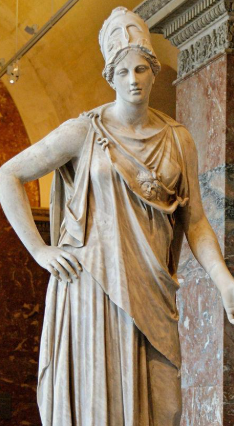
Recently, I have been immersed in the study of ancient Greek art, especially ancient Greek sculpture. I am really fascinated by this exquisite art form, and I can’t wait to share my new understanding of ancient Greek sculpture with you.
The development of ancient Greek sculpture can be roughly divided into three important periods :
Classical Period (Golden Age of Greek Sculpture)
The sculptures of this period show perfect proportions and body forms. Sculptors pursued ideal beauty and perfect images, usually depicting gods, heroes and naked men. One of the most famous works is the Parthenon on the Acropolis of Athens, which uses the ancient Greek Doric column style, which is sturdy and powerful, with a simple and solemn style. It also includes huge stone statues and bas-reliefs, which show the ancient Greek people’s worship of gods and the emphasis on etiquette.
Hebronian Period (Late Classical Period)
During this period, wars between Greek city-states were frequent, and the political landscape of Greece changed. Facing internal political turmoil and external threats, Sparta defeated Athens in the Peloponnesian War and became the overlord of Greece. The style of sculptures at this time tended to be exaggerated and dramatic. The works usually depicted scenes of war and revelry, such as the reliefs of Hercules and war scenes.
Late Classical (Hellenistic) period
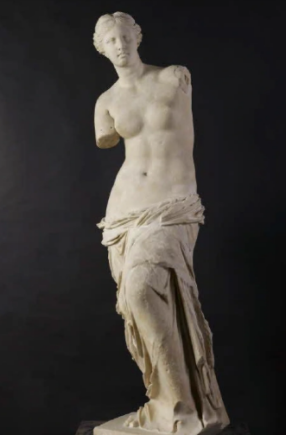
With the disintegration of the city-state, politics, religion and art gradually lost their seriousness. Art began to become a means for a small number of aristocratic rulers to show off, enjoy themselves and whitewash reality, which lowered the status of gods in art. People and their lives appeared more in artistic themes. The sculptures of this period depicted more scenes and characters in daily life, which increased the expressiveness and individuality of sculptures, such as the “Venus de Milo” statue, also known as the “Broken Tube Venus”.
Artistic Features
Common materials used in ancient Greek sculptures include marble, bronze, etc. Marble is hard and fine-grained. After carving and polishing, it can present a smooth surface and exquisite details, which is very suitable for expressing the texture of human skin and soft light and shadow effects.
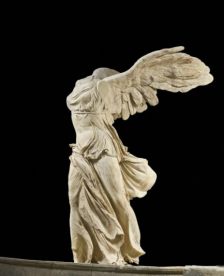
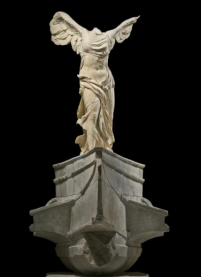
Take the Statue of Victory in the Louvre for example. Her upper body is slightly leaning forward, her strong and huge wings are flying high, and her legs are standing front and back. The corners of her clothes fluttering backwards and her spread wings form smooth lines, and the wavy lines of her legs and wings form an obtuse triangle, which strengthens the forward momentum, as if she has descended from the sky onto the bow of the ship, leading the fleet to ride the wind and waves towards victory.
The pleats of the dress are delicately carved, and the gauze-like material clings to the goddess’ body, even revealing the outline of her navel, vividly showing the blowing sea breeze and the surging waves.
The wings are the most powerful part of the sculpture. Viewed from a certain angle, the outline is simple and powerful, and the smooth lines outline the upward momentum, which is also the inspiration for the Nike brand logo.