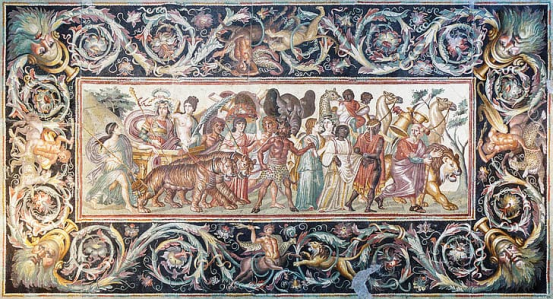
In the vast history of ancient art, Roman painting undoubtedly stands as one of its most dazzling gems. In 79 AD, the sudden eruption of Mount Vesuvius buried cities like Pompeii and Herculaneum, but it also unexpectedly preserved a vast collection of Roman frescoes, offering a glimpse into the art and daily life of ancient Roman society. These exquisite frescoes, not only vibrant in color and masterfully executed, offer a crucial window into ancient Roman culture, lifestyle, and aesthetics. Every stroke and color holds a vivid memory of ancient civilization, an artistic code frozen in the volcanic ash.
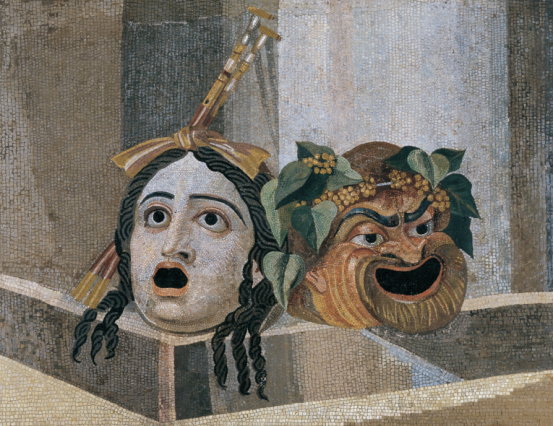
1. Frescoes: The Roman Craftsmen’s “Dance of Time”
Fresco painting is a core technique in Roman painting. Originating in ancient Greece and perfected in Rome, this art form requires the artist to coat the wall with lime plaster and then quickly apply pigment while the plaster is still wet. The lime plaster’s absorbent properties allow the pigment to penetrate deeply into the wall, creating a durable, non-fading finish. This meticulously timed approach has enabled these murals to retain their vibrant color, preserved by volcanic ash for thousands of years.
Roman artisans refined fresco painting techniques through precise pigment blending and wall treatment. They sourced natural minerals from diverse regions: Egyptian ochre for warm reds, Greek lapis lazuli for deep blues, and Italian pyrite for dazzling golds. To enhance the texture, marble powder or fine sand were mixed into the lime plaster. The surviving frescoes in Pompeii’s Villa of the Mysteries represent a near-perfect example of this technique. The scenes depicting the sacrifice to Dionysus remain vividly lifelike, with delicate white and gold lines framing the figures’ clothing and the tension of their movements undiminished.
Furthermore, the Romans deeply integrated painting and architecture. Frescoes were not merely home decorations but extensions of space. Whether in the lobby of a private villa or the lounge of a public bathhouse, frescoes imbued otherwise confined spaces with a sense of depth and life. In Rome, painting was more than just art; it was closely integrated into the architectural environment and became a part of daily life.
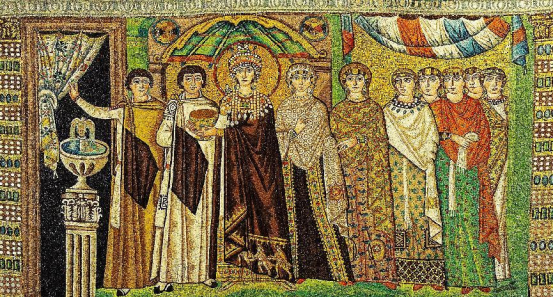
2. Thematic Narrative: The Interweaving of Myth and Everyday Life
The themes of Roman murals are wide-ranging, covering scenes from myths and legends to daily life in the market, showing the cultural characteristics of “coexistence of divinity and secularity” in Roman civilization.
Mythology is a core theme in murals. Rather than copying Greek myths, the Romans adapted them to their own local context. For example, the fresco depicting the Twelve Labors of Heracles in the Villa of the Veti Family in Pompeii presents a completely different image from the Greek version: Heracles is dressed in Roman general’s armor and holds a scepter, while the background features Roman colonnades and altars. This adaptation not only preserves the core of the myth but also incorporates Roman moral interpretations of heroes, reminding family members to be brave, loyal, and responsible.
Beyond mythology, scenes of everyday life were a key theme in Roman murals. In Herculaneum, the “Baker’s House” features vivid murals depicting the entire bread-making process, from kneading the dough to baking, and even bargaining between customers and bakers. These scenes defied the traditional notion that art was reserved for the nobility, demonstrating that art could be a part of everyday life. Even ordinary artisan families could document their professions and daily routines through murals.
3. Perspective and Illusion: The Magic of Space
Roman painters employed various perspective and optical illusion techniques in their murals, giving the originally flat walls a three-dimensional appearance. These techniques, combined with perspective and trompe-l’oeil (illusions of vision), made these paintings not merely visual embellishments but also extensions of the sense of space.
For example, in the frescoes in the Garden Room of the Villa Livia, the artist skillfully employed single-point perspective, converging elements like trees and paths toward a distant “vanishing point” to create the appearance of an endless garden. While this technique wasn’t formally introduced until the Renaissance, Roman painters had already mastered it over 1,400 years earlier, demonstrating their sophisticated understanding of spatial principles.
Furthermore, the painters simulated architectural structures, such as virtual colonnades and windows, to break the limitations of physical space and make the room appear more spacious. This “spatial deception” not only highlights the Romans’ pursuit of architectural aesthetics, but also demonstrates their desire to shape the temperament of a grand empire – they hoped to use art to depict a magnificent scene that did not match the actual space.
4. Artistic Heritage in Volcanic Ash
Without the eruption of Mount Vesuvius, Roman frescoes might have disappeared over time, like many other ancient art forms. However, it was this disaster that enveloped the frescoes of Pompeii and Herculaneum in thick volcanic ash, protecting them from external erosion and making them the most complete living fossils of ancient Roman art.
These frescoes not only showcase exquisite works of art but also offer a glimpse into ancient Roman society. From mythological stories, we can sense the Romans’ admiration for heroism; from scenes of daily life, we can see their diet, occupations, and recreation; and from trompe l’oeil, we can appreciate their exploration of spatial aesthetics. These paintings not only dispel the stereotype that ancient art is detached from life, but instead allow us to appreciate that Roman art is imbued with a sense of life that is closely connected to ordinary people.
Today, the influence of Roman frescoes remains profound: they have inspired Renaissance artists, influenced modern interior design, and can still be seen in contemporary street art. Roman frescoes are no longer confined to history; they have become a shared artistic heritage for all of humanity. Transcending time and geography, they convey the ancient Romans’ love and curiosity for beauty, life, and the world.