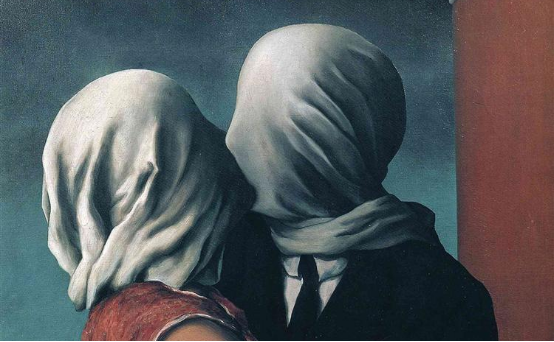
The history of art is a dynamic tapestry woven with countless threads of innovation, rebellion, and profound shifts in perception. At its core lie the various artistic painting movements, each representing a collective artistic philosophy, a set of aesthetic principles, and a distinct approach to creation that defined an era. These movements are not merely stylistic trends; they are reflections of societal changes, technological advancements, philosophical debates, and the ever-evolving human desire to express the inner and outer worlds.
Understanding these movements is crucial for appreciating the depth and breadth of artistic expression. This comprehensive guide will delve into some of the most pivotal painting movements, dissecting their origins, core tenets, characteristic techniques, and the indelible mark they left on the global art landscape. From the quest for objective truth in realism to the subjective emotional outbursts of expressionism, and the deconstruction of form in cubism, we will explore how artists continually pushed boundaries and redefined what art could be.
Realistic Painting: Representation of Truth in Art
Realistic painting, at its essence, is the endeavor to depict subjects as they appear in real life, with meticulous attention to detail, proportion, light, and shadow. This approach prioritizes verisimilitude, aiming to create an illusion of reality on a two-dimensional surface. While realism has been a recurring impulse throughout art history, periods like the Renaissance saw its flourishing, and later, the Realism movement of the 19th century solidified its place as a distinct artistic philosophy, often as a direct response to the romanticized narratives of Neoclassicism and Romanticism.
Core Principles and Historical Context
The Realism movement emerged in France in the 1840s, championed by artists who sought to portray contemporary life and ordinary people with unflinching honesty. They rejected the idealized forms and historical or mythological subjects favored by academic art. Instead, they focused on the mundane, the working class, and the everyday struggles of modern society. This was a radical shift, as it elevated subjects previously considered unworthy of artistic representation.
- Objective Observation: Artists dedicated themselves to precise visual observation, capturing the world without embellishment or dramatization.
- Social Commentary: Many realistic works subtly or overtly commented on social inequalities, industrialization, and urban life.
- Authenticity: Emphasis was placed on depicting textures, colors, and forms as they naturally appeared, often with a raw, unpolished quality.
Key Techniques and Artists
Realist painters employed techniques that enhanced the illusion of reality and grounded their work in tangible experience. Their methods often involved careful preparatory studies, a muted color palette to avoid theatricality, and a focus on capturing the specific qualities of light and atmosphere.
- Detailed Brushwork: While not always invisible, brushwork served to render details accurately, from facial expressions to fabric folds.
- Perspective and Chiaroscuro: Mastery of linear and atmospheric perspective, alongside the dramatic use of light and shadow (chiaroscuro), created depth and volume.
- Gustave Courbet: A leading figure, Courbet famously declared, “I cannot paint an angel because I have never seen one.” His works like “The Stone Breakers” and “A Burial at Ornans” exemplify the movement’s commitment to depicting the unvarnished truth of common life.
- Édouard Manet: Though often considered a precursor to Impressionism, Manet’s early works, such as “Olympia” and “Luncheon on the Grass,” challenged academic conventions with their direct gaze and depiction of contemporary figures, sparking controversy and paving the way for modern art.
- Jean-François Millet: Known for his poignant depictions of peasant life, such as “The Gleaners,” Millet captured the dignity and hardship of agricultural laborers with profound empathy.
Realistic painting laid foundational groundwork for subsequent movements by asserting the importance of depicting the contemporary world and challenging established artistic hierarchies.

Impressionist Art: The Revolution of Light and Color
Impressionist art, emerging in the 1860s and 1870s in France, marked a radical departure from the rigid traditions of academic painting, particularly realism’s emphasis on precise detail. Instead, Impressionists focused on capturing the fleeting “impression” of a moment, emphasizing the interplay of light, color, and atmosphere. This movement was revolutionary in its approach to painting outdoors (en plein air) and its scientific study of light, transforming how artists perceived and rendered the visible world.
Origins and Defining Characteristics
The movement’s name itself came from a derogatory review of Claude Monet’s painting “Impression, Sunrise” (1872). Impressionists were fascinated by the changing effects of light at different times of day and seasons, and how these changes altered the appearance of objects and landscapes. They sought to record the immediate visual sensation, rather than an idealized or highly finished scene.
- Emphasis on Light: Light became the primary subject, with artists observing how it affected color and form.
- Visible Brushstrokes: Short, thick brushstrokes were used to capture the essence of a subject quickly, often appearing unfinished to contemporary viewers.
- Plein Air Painting: Artists moved from studios to paint outdoors, allowing them to directly observe natural light and color.
- Pure, Unmixed Colors: Colors were often applied side-by-side on the canvas, allowing the viewer’s eye to blend them, creating a vibrant, luminous effect.
- Everyday Subjects: Landscapes, cityscapes, portraits of ordinary people, and scenes of leisure became common themes.
Pioneering Techniques and Master Artists
Impressionist techniques were designed to capture spontaneity and the transient nature of perception. Their innovative use of color theory and brushwork had a profound impact on subsequent art movements.
- Broken Color Technique: Applying colors in small, distinct strokes allowed for a vibrant, shimmering effect, simulating the vibration of light.
- Absence of Black: Shadows were often painted with complementary colors rather than black, contributing to the overall luminosity.
- Claude Monet: The quintessential Impressionist, Monet’s series paintings, such as his “Water Lilies” and “Rouen Cathedral” series, are prime examples of his dedication to studying light’s effects across various conditions. His work is a testament to the idea that perception itself is the subject.
- Pierre-Auguste Renoir: Known for his vibrant depictions of social gatherings and portraits, Renoir captured the joy and sensuality of life, as seen in works like “Bal du moulin de la Galette.”
- Edgar Degas: While often associated with Impressionism, Degas preferred to be called a Realist. He focused on capturing moments from everyday life, particularly ballet dancers and laundresses, using unconventional compositions and dynamic perspectives.
- Camille Pissarro: Often considered the “father of Impressionism,” Pissarro was instrumental in organizing the Impressionist exhibitions and his work consistently explored rural and urban landscapes with a consistent focus on light and atmosphere.
Impressionism forever changed the way artists approached color and light, liberating them from academic constraints and opening the door for further experimentation in modern art.

Expressionist Painting: Emotion, Distortion, and Inner Worlds
Expressionist painting emerged in Germany at the beginning of the 20th century, primarily between 1905 and 1920, as a powerful counter-movement to the perceived superficiality of Impressionism and the detachment of academic art. Unlike Impressionists who sought to capture external reality, Expressionists aimed to convey profound emotional experience and inner psychological states, often through the distortion of reality, vivid and non-naturalistic colors, and energetic brushwork. It was an art of catharsis, reflecting the anxieties and spiritual turmoil of the pre-war and wartime eras.
Philosophical Underpinnings and Visual Language
Expressionism was rooted in a desire to explore subjective truth rather than objective reality. Artists felt that traditional artistic conventions were inadequate to express the complex inner world of human experience. This led to a radical reinterpretation of form and color.
- Subjective Experience: The artist’s internal feelings and emotional response to the world took precedence over faithful representation.
- Emotional Distortion: Figures and landscapes were often distorted, exaggerated, or fragmented to intensify emotional impact and convey psychological tension.
- Bold, Non-Naturalistic Colors: Color was used symbolically and expressively, often clashing or vibrant, to evoke particular moods or sensations rather than to accurately depict reality.
- Energetic Brushwork: Vigorous, often raw and unrefined brushstrokes, were employed to convey immediacy and emotional intensity.
- Primitivism: Many Expressionists drew inspiration from non-Western art, particularly African and Oceanic tribal art, for its directness and emotional power.
Leading Groups and Influential Figures
Two main groups formed the core of German Expressionism: Die Brücke (The Bridge) and Der Blaue Reiter (The Blue Rider), each with distinct, yet overlapping, approaches.
- Die Brücke (1905-1913): Formed in Dresden, its members included Ernst Ludwig Kirchner, Erich Heckel, Karl Schmidt-Rottluff, and later, Emil Nolde. They sought to create a “bridge” between traditional and modern art, advocating for a return to raw, uninhibited expression. Their work often featured urban scenes, nudes, and landscapes, characterized by stark outlines, jarring colors, and a sense of alienation. Kirchner’s “Street, Dresden” is a prime example of their urban angst.
- Der Blaue Reiter (1911-1914): Based in Munich, this group, led by Wassily Kandinsky and Franz Marc, was more spiritual and intellectual. They believed in the spiritual power of art and color, moving towards abstraction as a means of expressing inner harmonies and cosmic truths. Marc’s animal paintings, like “Blue Horse I,” explored the spiritual essence of creatures, while Kandinsky’s progressive move towards pure abstraction laid the groundwork for entirely non-representational art.
- Edvard Munch: A Norwegian precursor to Expressionism, Munch’s iconic painting “The Scream” (1893) encapsulates the existential angst and emotional intensity that would become central to the movement, depicting a universal feeling of anxiety rather than a specific event.
Expressionism’s focus on the internal world and its bold rejection of conventional beauty paved the way for many subsequent avant-garde movements and profoundly influenced the development of modern art, particularly in its emphasis on emotional authenticity.

Cubism and Collage: Deconstructing Reality
Cubism, pioneered by Pablo Picasso and Georges Braque in the early 20th century (roughly 1907-1914), represents one of the most revolutionary and intellectually rigorous movements in art history. It fundamentally challenged the conventions of Western art by rejecting traditional single-point perspective and instead depicting subjects from multiple viewpoints simultaneously. This radical approach fragmented objects into geometric shapes, giving rise to its name and forever altering the perception of pictorial space. The integration of collage later became a significant extension of Cubist principles, further blurring the lines between art and reality.
Phases of Cubism: Analytical and Synthetic
Cubism evolved through distinct phases, each pushing the boundaries of representation and perception.
- Analytical Cubism (1907-1912): This early phase is characterized by a rigorous deconstruction of objects into small, overlapping, geometric planes, often rendered in a monochromatic palette of grays, browns, and blacks. The subject matter (portraits, still lifes, figures) becomes almost unrecognizable, dissolved into a complex network of facets. The goal was to analyze the subject from every conceivable angle and present all these views simultaneously on the canvas, forcing the viewer to engage intellectually with the image.
- Synthetic Cubism (1912-1914): In contrast to the analytical phase, Synthetic Cubism moved towards building up forms from simpler shapes and often incorporated brighter colors. This phase saw the introduction of collage (from the French “coller,” meaning “to glue”), where artists pasted pieces of paper, newspaper clippings, wallpaper, or other materials directly onto the canvas. This innovation introduced real-world objects into the artwork, challenging the illusionistic nature of painting and further exploring the relationship between representation and reality. The textures and literal fragments added a new dimension, emphasizing the flatness of the picture plane while also creating a dialogue between the depicted and the actual.
Key Techniques and Impact
Cubist techniques were groundbreaking, requiring both intellectual engagement from the artist and a new way of seeing from the viewer.
- Multiple Perspectives: Objects are depicted from several angles at once, creating a fractured, multi-faceted image. This shattered the Renaissance tradition of a single, fixed viewpoint.
- Geometric Abstraction: Forms are broken down into basic geometric shapes, often overlapping and interlocking, creating a sense of shallow, compressed space.
- Passage: An innovative technique where planes bleed into one another, creating an open, fluid composition rather than distinct, closed forms.
- Pablo Picasso: Co-founder of Cubism, his seminal work “Les Demoiselles d’Avignon” (1907) is often considered the precursor to Cubism, breaking figures into angular planes. His subsequent works, like “Portrait of Ambroise Vollard,” exemplify Analytical Cubism’s complex fragmentation.
- Georges Braque: The other co-founder, Braque worked closely with Picasso, often creating works so similar they are difficult to distinguish. His contributions to the development of collage, particularly in works like “Fruit Dish and Glass” (1912), were pivotal.
Cubism’s radical redefinition of space and form profoundly influenced nearly every subsequent avant-garde movement, from Futurism and Constructivism to Pop Art, and remains a cornerstone of modern art history.

Surrealist Painting: The Interweaving of Dreams and Reality
Surrealist painting, which emerged in the 1920s, was not merely an art movement but a philosophical and literary one, deeply influenced by Sigmund Freud’s theories of the unconscious mind. Led by André Breton, the Surrealists sought to liberate the subconscious, exploring the realm of dreams, irrationality, and the uncanny to create art that transcended conventional reality. Their work aimed to tap into a “superior reality” – the surreality – where dreams and waking life merge into an absolute reality.
Theoretical Foundations and Visual Strategies
Surrealism was formally launched with André Breton’s “Manifesto of Surrealism” in 1924. It proposed “psychic automatism in its pure state,” meaning expressing the actual functioning of thought, free from the control exercised by reason, and external aesthetic or moral considerations. This led to a diverse range of visual strategies.
- Automatism: Techniques like automatic drawing or writing were used to bypass conscious control and allow subconscious impulses to guide the creative process.
- Dream Imagery: Artists depicted dream-like scenarios, often illogical juxtapositions of objects, distorted figures, and bizarre landscapes, aiming to evoke the profound and often disturbing logic of dreams.
- Juxtaposition of the Unlikely: Common objects were placed in unexpected contexts, creating a sense of surprise, shock, and wonder, as exemplified by Lautréamont’s famous phrase, “the chance encounter of a sewing machine and an umbrella on an operating table.”
- Veristic Surrealism: Some artists rendered fantastic, dream-like scenes with meticulous, almost photographic detail, making the impossible seem disturbingly real.
- Biomorphic Surrealism: Other artists used abstract, organic forms to represent subconscious processes and dream states.
Iconic Artists and Their Contributions
Surrealism attracted a diverse group of artists, each bringing their unique vision to the movement, contributing to its rich and varied aesthetic.
- Salvador Dalí: Perhaps the most famous Surrealist, Dalí’s works are characterized by their striking, often bizarre, dreamscapes rendered with hyper-realistic precision. His iconic painting, “The Persistence of Memory” (1931), with its melting clocks, profoundly explores themes of time, memory, and the subconscious. Dalí’s paranoia-critical method was his unique approach to accessing the subconscious.
- René Magritte: Magritte challenged perceptions of reality through witty and provocative juxtapositions, often using ordinary objects in extraordinary ways. His painting “The Treachery of Images” (1929), featuring a pipe with the caption “Ceci n’est pas une pipe” (This is not a pipe), questions the nature of representation and language itself.
- Joan Miró: Miró’s work often leaned towards biomorphic abstraction, using simplified forms and vibrant colors to create playful, poetic, and often cosmic dreamscapes, as seen in works like “The Farm.” His intuitive approach embodied the automatist ideals.
- Max Ernst: A pioneer in utilizing frottage and grattage techniques, Ernst created unsettling, textured images that explored psychological landscapes and mythical narratives, blending human, animal, and machine forms.
Surrealism’s exploration of the subconscious profoundly influenced not only art but also literature, film, and psychology, leaving an enduring legacy on how we understand creativity and the human mind.

Abstract Painting: Artistic Expression Beyond Reality
Abstract painting represents a fundamental shift in art, moving away from the literal representation of the visible world towards an emphasis on form, color, line, and texture as subjects in themselves. This movement, which gained prominence in the early 20th century, seeks to evoke emotions, ideas, or spiritual concepts without relying on recognizable external reality. It challenges viewers to engage with art on a purely aesthetic and conceptual level, exploring the intrinsic power of visual elements.
Evolution and Diverse Forms of Abstraction
Abstract art did not emerge as a single, unified movement but rather as a broad tendency with various schools and philosophies. Its roots can be traced to post-Impressionist artists like Paul Cézanne, who broke down forms into geometric components, and Vincent van Gogh, whose expressive use of color and brushwork moved away from strict representation.
- Early Pioneers: Wassily Kandinsky is often credited with painting one of the first purely abstract works around 1910. He believed art could express inner spiritual necessities, much like music.
- Cubist Influence: Cubism, with its fragmentation of reality, laid crucial groundwork for abstraction by demonstrating how objects could be deconstructed and reassembled.
- Suprematism and Constructivism: Russian artists like Kazimir Malevich (Suprematism) and Vladimir Tatlin (Constructivism) pushed abstraction towards pure geometric forms and utilitarian design, respectively.
- Neo-Plasticism (De Stijl): Piet Mondrian’s grid-based compositions, using only primary colors and black and white, aimed to express universal harmony and order through geometric abstraction.
Abstract Expressionism: The Power of Color and Shape
Within the broader category of abstract painting, Abstract Expressionism emerged in New York City in the 1940s and 1950s, marking the first truly American art movement to achieve international influence. It was characterized by large-scale, gestural, and often emotionally charged canvases, reflecting the artists’ individual inner turmoil and subconscious impulses. It was a rebellion against both the geometric abstraction of European modernism and the narrative content of social realism.
Defining Characteristics of Abstract Expressionism
Abstract Expressionists rejected conventional composition and subject matter, focusing instead on the process of painting itself and the emotional release it provided.
- Spontaneous, Gestural Brushwork: Often referred to as “Action Painting,” this involved dynamic, sweeping gestures, drips, and splashes of paint, emphasizing the physical act of creation.
- Large Scale: Many works were monumental in size, intended to envelop the viewer and create an immersive experience.
- Emphasis on the Subconscious: Influenced by Surrealist automatism and Jungian psychology, artists sought to express universal archetypes and raw emotional states.
- Color Field Painting: A sub-genre where large, flat areas of color were applied to evoke emotional or spiritual responses, often with subtle variations in tone and saturation.
Key Figures in Abstract Expressionism
- Jackson Pollock: The most iconic “Action Painter,” Pollock developed his unique “drip painting” technique, pouring and dripping paint onto canvases laid on the floor. Works like “Number 1A, 1948” are pure expressions of energetic movement and controlled chaos.
- Willem de Kooning: Known for his fierce, gestural brushwork and often violent depictions of the female form, de Kooning straddled the line between abstraction and figuration, as seen in his “Woman” series.
- Mark Rothko: A leading Color Field painter, Rothko created luminous canvases with soft-edged rectangular fields of color, designed to evoke profound emotional and spiritual contemplation. His works like “No. 14, 1960” invite viewers into a meditative experience.
- Franz Kline: Known for his bold, black-and-white gestural paintings that resembled monumental calligraphic strokes, Kline’s work conveyed a sense of raw power and immediacy.
Abstract painting, particularly Abstract Expressionism, liberated art from the constraints of representation, asserting the autonomy of the artwork and paving the way for countless forms of non-objective art that followed.

The Enduring Legacy of Artistic Movements
The journey through these major artistic painting movements reveals a continuous dialogue between tradition and innovation, representation and abstraction, objectivity and subjectivity. Each movement, while distinct, built upon or reacted against its predecessors, contributing layers of complexity and richness to the grand narrative of art history. Their collective impact extends far beyond the canvases themselves, influencing cultural thought, design, architecture, and even our everyday visual language.
Impact on Art History and Contemporary Practice
The revolutions sparked by movements like Impressionism’s embrace of light, Cubism’s deconstruction of form, Expressionism’s emotional intensity, and Surrealism’s dive into the subconscious, have permanently expanded the definition of what art can be. They liberated artists from rigid academic rules, empowering them to explore personal vision, experiment with new materials, and engage with the pressing issues of their time.
- Expanded Artistic Vocabulary: Each movement introduced new techniques, theories, and approaches to color, form, and composition that became part of the enduring artistic lexicon.
- Challenging Perception: These movements consistently pushed viewers to see the world, and art itself, in new and unconventional ways, fostering critical thinking and open-mindedness.
- Foundations for Future Art: The innovations of these movements directly informed subsequent developments such as Pop Art, Minimalism, Conceptual Art, and Postmodernism, demonstrating a continuous lineage of artistic inquiry.
- Cultural Reflection: Art movements often serve as powerful mirrors of their respective societies, reflecting political turmoil, technological shifts, philosophical debates, and evolving human psychology.
From the precise rendering of the real in Realistic painting to the pure emotional outpouring of Abstract Expressionism, these movements collectively underscore art’s profound capacity to reflect, question, and reshape human experience. They remind us that art is not static but a living, breathing entity, constantly evolving and inviting us to participate in its ongoing creation and interpretation.
Frequently Asked Questions (FAQ)
- Q1: What defines an artistic painting movement?
- An artistic painting movement is typically characterized by a shared philosophy, aesthetic principles, and stylistic tendencies among a group of artists during a specific period. These movements often emerge in response to prevailing artistic norms, societal changes, or new technological and philosophical ideas, leading to a collective shift in how art is conceived, created, and perceived.
- Q2: How did Impressionism revolutionize painting?
- Impressionism revolutionized painting by shifting focus from historical or mythological subjects to capturing the fleeting effects of light and atmosphere in contemporary life. Artists moved outdoors to paint “en plein air,” using visible, broken brushstrokes and pure, unmixed colors to record immediate visual sensations, rather than highly finished, detailed scenes. This emphasis on perception and light fundamentally changed the artistic approach to color and composition.
- Q3: What is the main difference between Abstract Painting and Realistic Painting?
- The main difference lies in their approach to representation. Realistic painting aims to depict subjects as they appear in the physical world, striving for verisimilitude and objective truth. Abstract painting, conversely, moves away from literal representation, using elements like color, line, form, and texture as subjects in themselves to express emotions, ideas, or spiritual concepts without relying on recognizable external reality. It emphasizes the intrinsic power of visual elements rather than narrative or descriptive content.
- Q4: What role did the subconscious play in Surrealist painting?
- The subconscious mind was central to Surrealist painting. Influenced by Sigmund Freud’s psychoanalytic theories, Surrealists sought to liberate the unconscious, exploring dreams, irrationality, and the uncanny. Techniques like automatism were employed to bypass conscious control