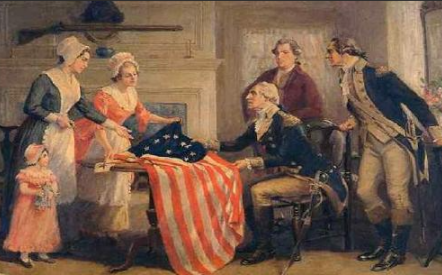
The Catalyst of Conflict: Understanding the American Revolution
The American Revolution was not merely a localized uprising; it was a profound ideological shift that challenged the legitimacy of absolute monarchy and colonial subjugation. Sparked by tensions over economic policy, taxation without representation, and the desire for self-governance, the conflict redefined the relationship between the governed and the government.
Economic Tensions and Legislative Overreach
The British government’s attempt to recoup costs from the Seven Years’ War led to a series of restrictive legislative measures that alienated the American colonies. These acts were perceived not just as financial burdens, but as direct infringements on the fundamental rights of English subjects residing in the colonies.
- The Stamp Act (1765): A direct tax on paper goods that sparked the first organized resistance across colonial borders.
- The Townshend Acts (1767): A series of duties on imported goods that fostered a culture of boycotts and civil disobedience.
- The Coercive Acts (1774): Known in the colonies as the “Intolerable Acts,” these punitive measures effectively united the thirteen colonies against a common threat.

The Philosophical Foundations of the Declaration of Independence
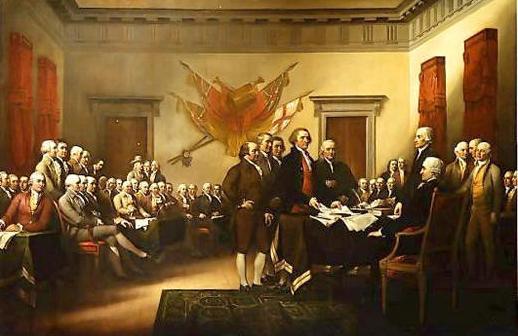
Adopted on July 4, 1776, the Declaration of Independence served as the manifesto of the American Revolution. It was a radical document that synthesized Enlightenment philosophy—most notably the ideas of John Locke—into a practical blueprint for a new nation founded on the principles of natural rights and popular sovereignty.
The Architecture of Natural Rights
The preamble of the Declaration is arguably the most influential passage in American political history. By asserting that all men are created equal and endowed with inalienable rights, the Founders established a moral high ground that rendered British colonial rule incompatible with human liberty.
| Philosophical Concept | Definition | Impact on Revolution |
|---|---|---|
| Natural Rights | Life, Liberty, and the pursuit of Happiness | Justified separation from the Crown |
| Social Contract | Government exists by consent of the governed | Delegitimized the “Divine Right of Kings” |
| Popular Sovereignty | Power resides with the people | Authorized the creation of a Republic |
Strategic Turning Points of the Revolutionary War
The military success of the American Revolution was contingent upon a series of strategic maneuvers and geopolitical alliances. The war was characterized by a transition from traditional European warfare to a more fluid, attrition-based strategy that utilized the vast American landscape to the Continental Army’s advantage.
The Impact of International Alliance
The victory at the Battle of Saratoga proved to be the decisive turning point. It convinced the French monarchy that the American cause was legitimate and sustainable, leading to a military alliance that provided the necessary naval support and professional training to secure ultimate independence.

Legacy and Long-Term Impact on Global Governance
The success of the American Revolution provided a structural template for subsequent democratic movements worldwide. By codifying the rights of the individual within a written framework, the United States demonstrated that a nation could be formed through constitutional deliberation rather than mere historical inheritance.
The Global Ripple Effect
The concepts pioneered in 1776 directly influenced the French Revolution and subsequent decolonization movements across Latin America. The transition from a monarchical hierarchy to a republic became the gold standard for 19th-century political evolution.
Frequently Asked Questions (FAQ)
- Q1: Why was the Declaration of Independence considered a radical document in 1776?
- It was radical because it explicitly rejected the divine right of kings and asserted that governmental authority is only legitimate when it protects the natural rights of the citizens it governs.
- Q2: How did the French alliance change the course of the American Revolution?
- The French provided essential financial aid, military supplies, and a naval force that prevented the British from maintaining total control of the American coastline, effectively shifting the war into a global conflict.
- Q3: What was the primary economic grievance of the American colonists?
- The primary grievance was “taxation without representation.” Colonists argued that because they had no elected representatives in the British Parliament, that body had no constitutional authority to impose taxes upon them.
- Q4: How does the Declaration of Independence differ from the U.S. Constitution?
- The Declaration is a philosophical statement of intent and a justification for independence, whereas the Constitution is the functional legal framework that established the structure and powers of the federal government.