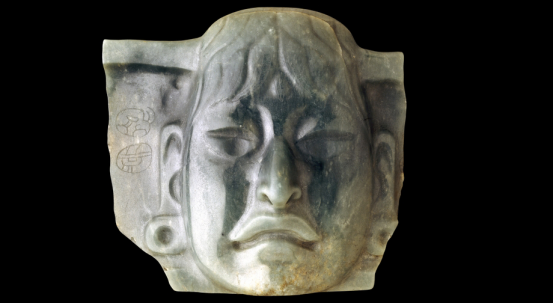
Microscopic Analysis of Mayan Jade Carving Techniques
The study of Mayan jade artifacts has long been hampered by the hardness of the material and the perceived simplicity of ancient tools. However, recent microscopic surface analysis has unveiled a sophisticated array of adaptive innovations in jade processing. By examining tool marks at a nanometer scale, researchers have identified that Mayan artisans utilized specialized abrasive slurries combined with obsidian-tipped drills to achieve intricate relief work.
Adaptive Innovations in Lithic Processing
The transition from basic percussion to refined abrasion signifies a major leap in pre-Columbian engineering. Evidence suggests that the Mayans managed to recycle abrasive dust, effectively creating a closed-loop system for carving, which significantly reduced tool wear and increased precision.
- Abrasive Slurry Dynamics: The use of jadeite dust as a cutting medium allowed for the polishing of hard surfaces without shattering.
- Rotational Force Application: Micro-fracture patterns indicate the use of bow drills, providing the high-torque, low-speed rotation necessary for delicate inlay work.

Multispectral Imaging and Ancient Greek Polychromy
Modern audiences often perceive ancient Greek sculpture as austere, white marble; however, multispectral imaging has definitively proven that these works were once vibrant, polychromatic masterpieces. By capturing light signatures outside the visible spectrum, researchers can map residual pigments that are invisible to the naked eye.
Reconstructing the Original Splendor
The process of optical decoding involves mapping chemical signatures of various pigments, such as Egyptian blue or cinnabar. These digital overlays allow historians to reconstruct the original appearance of statues with unprecedented accuracy, challenging long-held assumptions about Classical aesthetics.
| Pigment Type | Chemical Marker | Original Visual Impact |
|---|---|---|
| Egyptian Blue | Copper-silicate | Deep, celestial brilliance |
| Cinnabar | Mercury Sulfide | Vibrant, authoritative red |

Isotope Analysis and Marble Provenance
Tracing the origin of marble in Renaissance statuary has been revolutionized by isotope analysis. By measuring the stable isotopes of carbon and oxygen within a marble sample, scientists can pinpoint the exact quarry from which the stone was extracted. This has revealed a vast, interconnected network of Carrara vein exploitation that dates back centuries earlier than previously documented.
The Carrara Vein Network
Isotopic mapping allows for the identification of “fingerprints” unique to specific geological formations. This data has enabled scholars to track the movement of raw materials across Europe, revealing the economic and logistical complexity of Renaissance sculpture production.

Neutron Imaging in Bronze Casting Analysis
The ancient lost-wax casting process is notoriously difficult to examine without damaging the artifact. Neutron imaging provides a non-destructive window into the internal structure of bronze sculptures. Because neutrons penetrate dense metal, they reveal the internal armatures, casting cores, and hidden voids that define the artist’s casting strategy.
Deciphering the Lost-Wax Method
By visualizing the internal structure, researchers have discovered how ancient founders managed metal flow and cooling rates. This technique confirms that complex, multi-part bronze statues were often cast as a unified piece using sophisticated internal support lattices.

Laser Scanning and Parthenon Relief Restoration
Incomplete statues and fragmented reliefs present a jigsaw puzzle for modern archaeologists. Laser scanning technology allows for the creation of high-fidelity 3D models of existing fragments. These models are then compared against historical records and digital archives to virtually reassemble missing components, effectively recovering the original aesthetic of the Parthenon reliefs.
Virtual Reconstruction Methodology
The process involves point-cloud generation, where millions of data points define the surface geometry. Algorithms can then identify matching fracture surfaces between fragments held in different international museums, facilitating a global digital reintegration of ancient heritage.
Frequently Asked Questions (FAQ)
- Q1: How does isotope analysis determine the origin of marble?
- Isotope analysis measures the ratio of stable carbon and oxygen isotopes. Because different quarries have unique geological histories, these ratios act as a chemical signature, allowing researchers to match a sample to a specific vein.
- Q2: Is neutron imaging safe for ancient artifacts?
- Yes. Neutron imaging is a non-destructive technique. Unlike X-rays, which interact with electrons, neutrons interact with the atomic nuclei, allowing them to penetrate deep into dense bronze or stone without damaging the object’s surface or internal structural integrity.
- Q3: Why was ancient Greek sculpture painted?
- Polychromy was a standard practice in the ancient world. Painting sculptures was intended to bring statues to life, signify status, and provide a clear visual narrative that white marble could not convey on its own.
- Q4: What is the primary benefit of laser scanning for broken statues?
- Laser scanning enables “virtual anastylosis.” It allows researchers to fit together digital fragments to test hypotheses about the original form without the physical risk of handling fragile, ancient artifacts.