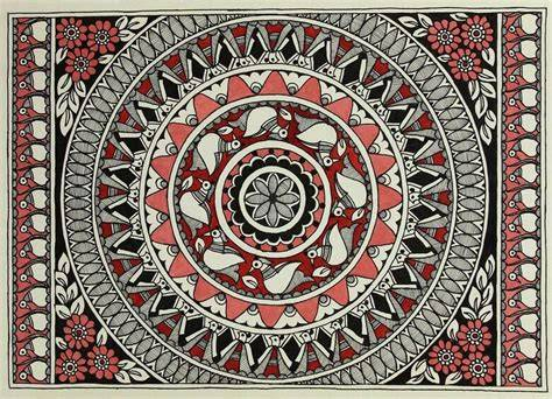
Chhattisgarh, nestled in the heart of India, is a unique place where tradition and modernity intertwine to create a vibrant cultural landscape. Not only is it renowned for its rich natural beauty, it also holds a treasure trove of traditional Indian art. Chhattisgarh’s paintings are more than simply artistic creations; they are deeply intertwined with tribal rituals, religious observances, and daily life. Whether it’s the dot-and-line art of the Gond tribe, the flowing epics of Patachitra, or the magnificent paintings on Kosa silk, every brushstroke and every color of Chhattisgarh narrates the rich history and beliefs of this land.
1. The Dot-Line Mythology of the Gond Tribe
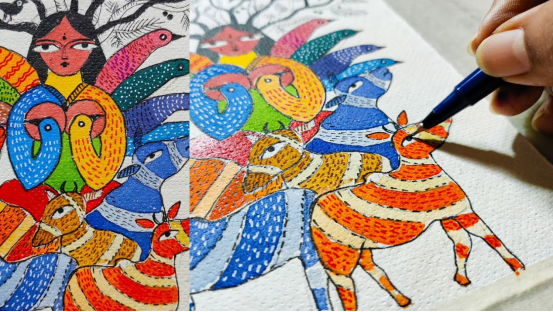
When you enter a tribal village in Chhattisgarh, the first thing that catches your eye is often the intricate, mystical “dot and line patterns.” This is Gond art, one of India’s most iconic tribal paintings. For the Gond people, painting is more than just art; it’s a way to communicate with the spirits. By depicting images of animals, trees, and deities, they believe they can secure the gods’ blessings.
Gond painting techniques, seemingly simple on the surface, are infused with rhythm. Artists typically use natural pigments extracted from plants and minerals, meticulously outlining the painting with lines and then filling in the surface with small dots. Each stroke seems to emulate the sounds and scents of nature—the rustling of trees, for example, or the rushing of a river. In Gond villages in the Bastar region, mythical birds and forests are common themes. The wings of the mythical birds are often depicted with curved lines, while the feathers are composed of tiny dots. The background depicts the various creatures of the forest.
2. Patachitra Scroll: A Flowing Epic
Compared to the static expressions of Gond art, Patachitra is more like a “flowing epic.” This art form, which blends painting and storytelling, is particularly widespread among the Pardhan community of Chhattisgarh. During festivals and community gatherings, the Pardhan “Chitrakar” (painters and storytellers) unfurl a several-meter-long cloth scroll, pointing to the figures depicted while chanting stories from the Mahabharata or the Ramayana in their local dialect.
Creating a Patachitra scroll is a meticulous process. Artists first weave the fabric, then apply a base coat of rice flour and glue. Using charcoal sticks, they meticulously depict the story’s scenes. Each painting adheres to rigorous technical requirements, ensuring distinct, layered colors and a clear, organized pattern. Beyond preserving epic stories, modern Patachitra artists have also begun to incorporate scenes from everyday village life into their scrolls, depicting community events and festivals. This fusion of ancient and modern traditions makes Patachitra a bridge between traditional and contemporary culture.
3. Kosa Silk Painting: The Luxurious Art of Silk and Color
Kosa silk, a treasure of Chhattisgarh, boasts a delicate texture and pearly luster, making it an ideal medium for painting. Kosa silk painting not only inherits the essence of traditional art but also represents a luxurious art form. Artists use fine brushes to create works of art on silk, often depicting natural and mythological themes, such as peacocks spreading their feathers, Krishna and the gopis. Every feather and every piece of clothing is brought to life by the silk’s lustrous sheen.
The colors of Kosa silk paintings are often closely linked to the seasons. During the rainy season, deep greens and blues are often used, vividly showcasing the lush greenery of the rainforest; while in the dry season, light yellows and browns are often used, capturing the vastness and immensity of the grasslands. These paintings are more than just decorative; they are often transformed into saris, scarves, or tapestries, becoming part of local life. For the artisans of Chhattisgarh, Kosa silk painting is an art form that perfectly blends tradition and luxury, giving new life to silk culture.
4. Pandavani: The Combination of Song and Painting
Pandavani is a unique art form that combines song, storytelling, and painting to tell the story of the five Pandavas from the Mahabharata. One of the most celebrated Pandavani performers is Teejan Bai, whose powerful voice brings the epic’s story to life. As she sings, she displays images from scrolls, creating a scene where the figures appear to “dance” in sync with her voice. This rendition breathes new life into this ancient epic.
Teejan Bai’s performances are always full of drama. She waves her arms, miming battle scenes, or strikes the ground with her feet to create rhythmic movement. These movements are in perfect harmony with her singing, as if the characters in the paintings are brought to life. Through this unique form of expression, Pandavani not only allows locals to experience the power of epic poetry, but also allows audiences from around the world to understand the emotional depth of Indian epics through painting and singing.
5. The Art of Heritage: The Cultural DNA of Chhattisgarh
The art of Chhattisgarh isn’t just confined to museums; it’s a living legacy. Children of the Gond tribe paint on walls, painters of Patachitra draw inspiration from everyday life, and artisans of Kosa silk explore new dyes and techniques. All of these traditional art forms are deeply integrated into contemporary local life, becoming a core part of community culture. Art is more than just decoration or entertainment; it connects past and present, the individual and the collective.
Chhattisgarh’s paintings have become a symbol of its culture. For the locals, their greatest treasure isn’t the paintings themselves, but the individuals who have passed down these arts from generation to generation. It’s these artists, artisans, and performers, with their hands and hearts, who keep the colors and beliefs of Chhattisgarh vibrant and vibrant.