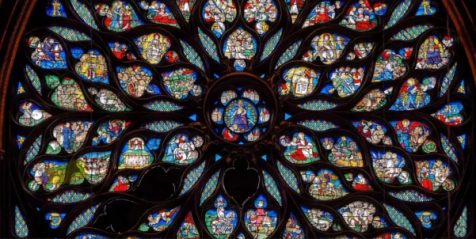
I have recently been immersed in the study of medieval art, and while exploring the rich variety of art forms of this period, the stained glass windows of Gothic cathedrals stood out as a shining pearl, exuding a unique charm that I couldn’t help but explore in depth.
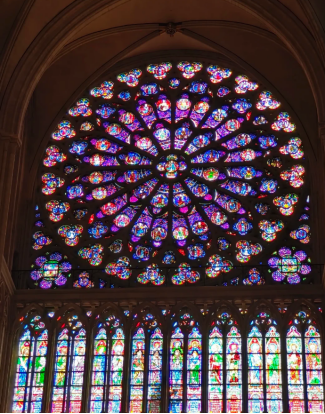
Background
In medieval Europe, religion played a dominant role in social life. Stained glass reached its peak between 1150 and 1500 and became an important part of medieval art. In a religious society like Western Europe, the highest form of art was concentrated in Gothic churches.
Gothic architecture pursues a towering sense of space and sufficient light intake, which provides an ideal carrier for the large-scale application of stained glass. Unlike the thick walls of previous Romanesque architecture, Gothic architecture liberates wall space through structural innovations such as pointed arches and flying buttresses, making it possible to install stained glass on a large scale.
In the social environment at that time, most people had a low literacy rate, and the church urgently needed an intuitive and shocking way to spread religious doctrines. The vivid Bible stories and images of saints on the stained glass were like “wordless books”. Even illiterate people could feel the power and sacredness of religion from them, making it an excellent medium for preaching to ordinary people.
Production process
When making stained glass, silicon, alkali, lime and other materials are used as the main raw materials, and metal oxides such as copper oxide, cobalt oxide and gold are added to change the color of the glass. For example, copper oxide turns the glass green, and cobalt oxide turns the glass blue. Designers first draw patterns on wooden boards or lime boards, then cut the glass into suitable shapes and sizes, and then use lead strips to splice the glass pieces together, and finally perform welding and other processing.
Artistic Features
Stained glass is rich in colors, mainly red, blue, green, yellow, etc., and creates a colorful, mysterious and solemn visual effect through the combination of different colors. Most of them are based on biblical stories, Christian miracles, religious figures, etc., such as the birth of Jesus, the Last Supper, the Virgin Mary, etc., and convey religious doctrines and spiritual connotations to believers through these patterns.
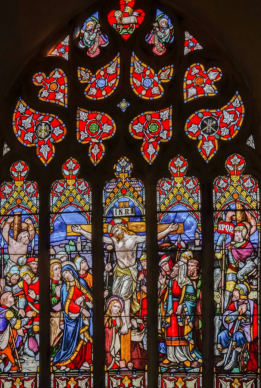
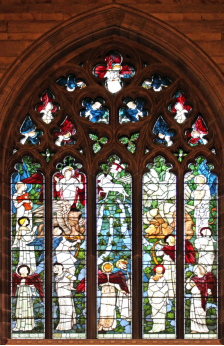
Gothic church stained glass, with its unique artistic charm and profound cultural connotation, has been baptized by hundreds of years and still shines with charming brilliance. If you are also attracted by these stained glass or find interesting details when visiting Gothic churches, please share and exchange, let us appreciate the unique charm of medieval art together.