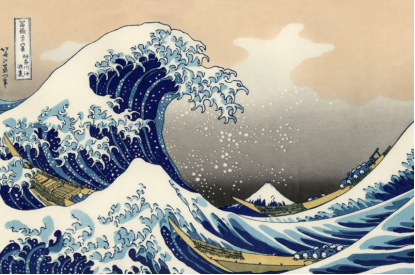
This week, I devoted myself to exploring Japanese Ukiyo-e. I was deeply attracted by this unique art form. It is like a window through which we can see the rich social landscape and unique aesthetic concepts of Japan’s Edo period.
The Origin of Ukiyo-e
Ukiyo-e emerged during Japan’s Edo period (1603-1867), a period of relative social stability, thriving commerce, and a growing citizen class. The word “floating world” comes from Buddhist terminology, in which everything in the world is impermanent and people live in an illusory, floating world. The word originally had a negative, otherworldly connotation. But during the Edo period, Japanese society was relatively peaceful and stable, and the urban economy was prosperous, especially large cities such as Edo (now Tokyo), which became centers of commerce and entertainment. With the rise of the citizen class, people paid more attention to the current pleasures of life, so it was given a new meaning to describe people’s attitude towards life at that time, which was to pursue worldly enjoyment.
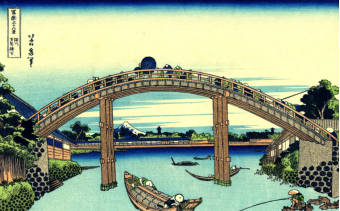
Initially, Ukiyo-e was mainly hand-painted, but later woodblock printing technology was gradually applied to its creation. Woodblock printing made it possible to reproduce Ukiyo-e works in large quantities, making them more affordable and allowing ordinary people to purchase and appreciate them, which greatly promoted the spread of Ukiyo-e.
Art Analysis
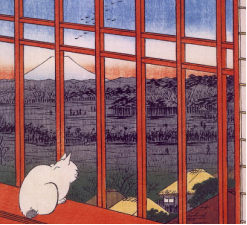
The subjects of Ukiyo-e include people, landscapes, dramas, myths , etc. Bright colors such as red, yellow, and blue are often used to attract the audience’s attention. Painters often use simple lines to outline the outlines of people and scenery. Ukiyo-e often uses asymmetrical composition to create a dynamic and balanced beauty .
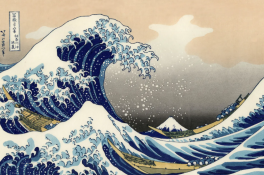
Hokusai Katsushika’s “The Great Wave off Kanagawa” : This is the most famous ukiyo-e painting depicting the rough sea with Mount Fuji in the background .
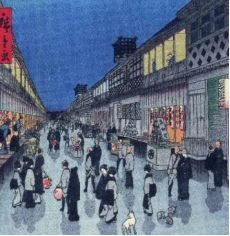
Utagawa Hiroshige’s ” One Hundred Famous Views of Edo ” ( Part 1 ): It gives us a glimpse into the prosperity of Japanese society at that time.
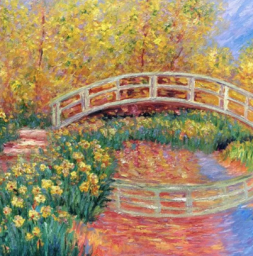
Monet’s ” Japanese Bridge ” : Monet loved Japanese art and even built a Japanese Bridge in his private garden.
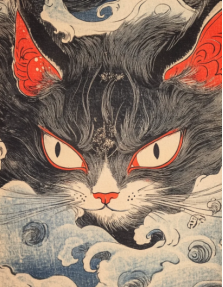
Utagawa Kuniyoshi: Cats Runaway : In Ukiyo-e, cats are not only symbols of household pets, but also often become the center of dramatic plots. For example, cats are depicted in some works as gods that can ward off evil and avoid harm, and have supernatural powers.