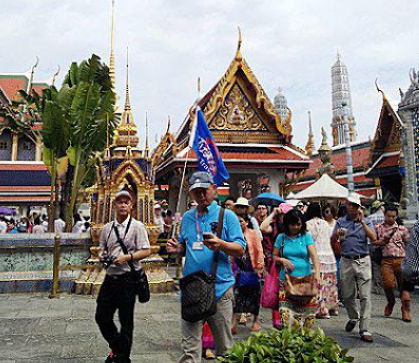
The Economic Underpinnings of Urban Tourism and Labor
Modern cities are often marketed as golden landscapes of opportunity, yet the reality behind the tourism industry reveals a stark contrast between consumer experience and the labor required to sustain it. The local economy is frequently built upon the backs of transient workers whose lives are dictated by the demands of the service sector.
The Cost of Hospitality
Tourism-driven economies often create a facade of prosperity that masks underlying systemic issues. While luxury hotels and tourist attractions dominate the skyline, they rely on a vast, often invisible, workforce that lives on the periphery. This creates a cycle where the very people who facilitate the tourist experience are priced out of the city centers they maintain.
- Economic Disparity: The gap between high-end tourism revenue and service worker wages creates a permanent underclass.
- Labor Mobility: Cross-border migration patterns demonstrate how labor flows toward economic hubs, often resulting in precarious living conditions for the migrant workforce.

Infrastructure as a Tool for Class Stratification
Urban planning is rarely neutral. From the layout of subway lines to the placement of transit hubs, infrastructure acts as a silent architect of social class. By analyzing the connectivity of a city, one can effectively map the boundaries between socioeconomic groups.
Subway Lines and Social Access
Subway systems do more than transport people; they determine who has access to the city’s economic and cultural life. Gentrification often follows the expansion of transit lines, effectively displacing lower-income residents as real estate values rise around new stations. This creates a “class map” where physical distance from a transit hub correlates directly with socioeconomic status.
| Factor | Impact on Social Mobility |
|---|---|
| Transit Proximity | High correlation with job access and wage growth. |
| Infrastructure Investment | Often favors affluent areas, exacerbating existing divides. |

The Urban Village and the Gated Divide
The contemporary urban fabric is characterized by a tension between informal settlements—often labeled as “urban villages”—and the rise of fortified, gated communities. These two extremes represent the physical manifestation of social exclusion and the desire for protected space.
Redefining the Urban Village
Far from being mere “slums,” urban villages serve as vital, affordable housing nodes for the working class. They are often the last remnants of authentic, organic life within a city, offering a safety net for migrants who would otherwise be pushed to the outskirts. However, they face constant threats from redevelopment and urban renewal projects.
The Psychology of Gated Communities
Gated communities represent the antithesis of the urban village. By creating literal walls, these developments seek to curate social interactions and isolate residents from the broader urban environment. This separation fosters a psychological disconnect, where the “inside” is perceived as a sanctuary, while the “outside” is viewed through a lens of apprehension or indifference.

Identity and the Marginalized Settlement
Urban geography also impacts the cultural identity of minority groups. Certain neighborhoods or settlements are rendered “blanks on the map,” neglected by public investment and social services. This erasure affects both the physical state of the settlements and the identity of the people living within them.
The Second-Generation Dilemma
For second-generation immigrants, the concept of “hometown” is fraught with complexity. Caught between the cultural heritage of their parents and the societal expectations of their current urban environment, they often struggle to find a sense of belonging. This identity crisis is compounded by the structural inequalities of the cities they inhabit.
Frequently Asked Questions (FAQ)
- Q1: How do transit systems influence gentrification?
- Transit systems act as catalysts for development. When new lines or stations are built, the increased accessibility makes the area attractive to investors and higher-income residents, leading to rising property values that displace established lower-income communities.
- Q2: Are urban villages merely slums?
- No. While they may suffer from lack of official infrastructure, urban villages provide essential, affordable housing for the migrant labor force. They often foster strong community networks that are absent in sanitized, modern apartment complexes.
- Q3: Why do gated communities negatively impact urban life?
- Gated communities create physical and social fragmentation. They reduce the “publicness” of a city, discouraging diverse social interactions and creating isolated bubbles that can hinder the development of a cohesive civic identity.
- Q4: What is the primary struggle of second-generation immigrants in urban centers?
- They face a dual struggle: the struggle for economic mobility within a stratified city and the psychological struggle of reconciling disparate cultural identities in a landscape that may not fully recognize their heritage.