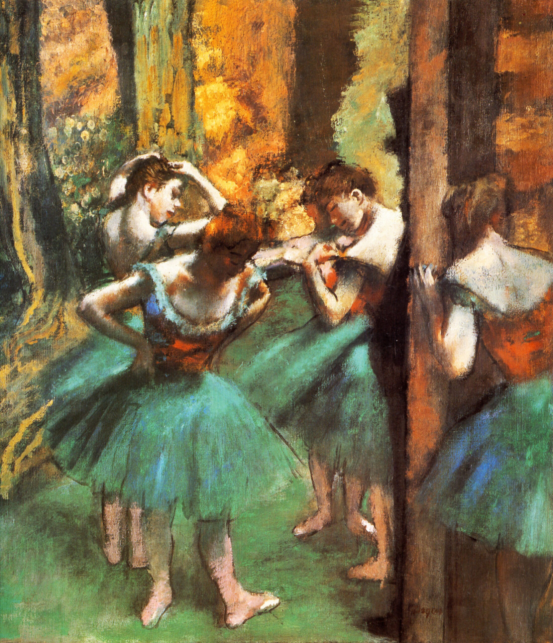
Edgar Degas, a towering figure of the Impressionist movement, is perhaps most famously associated with his depictions of the Paris Opera ballet. However, unlike his contemporaries who often focused on the spectacle of the performance, Degas was obsessed with the “behind-the-scenes” reality. His work serves as a visual document of the grueling discipline, the physical toll, and the psychological isolation inherent in the life of a 19th-century dancer. By examining works like those featuring the “pink dance dress” and the expansive rehearsal halls, we gain insight into a world where beauty is manufactured through sweat, exhaustion, and rigid structural rhythm.
The Hidden Labor Behind the Pink Dance Dress
The “Pink Dance Dress” in Degas’ oeuvre is not merely a costume; it is a symbol of the dual nature of the ballet. On the surface, the soft hues and delicate fabrics suggest a world of ethereal grace. Yet, Degas uses these garments to highlight the stark contrast between the public facade and the private struggle. The dancers are often depicted in states of utter fatigue, adjusting their straps or massaging their aching limbs, reminding the viewer that the “pink” is a uniform of labor rather than a gown of leisure.
The Physicality of Exhaustion
Degas captured the moments that photographers of the era could not: the slumped shoulders, the heavy sighs, and the unglamorous stretching. In many of these compositions, the pink dress becomes a focal point that draws the eye to the dancer’s physical state. The weight of the fabric and the tightness of the bodice serve as metaphors for the societal and professional pressures placed upon these young women, many of whom came from impoverished backgrounds and were known as “petits rats” (little rats) of the Opera.
The Solitude of the Performer
Despite being surrounded by peers, Degas’ dancers often appear profoundly alone. This loneliness is amplified by the artist’s use of space. A dancer in a vibrant pink dress might be positioned in a corner, isolated by the vast, cold expanses of the rehearsal room. This visual isolation reflects the competitive nature of the Paris Opera, where every girl fought for a spot in the limelight to escape a life of poverty, often at the cost of personal connection and childhood innocence.

The Rhythmic Architecture of the Wooden Floor
In “The Dance Lesson” and similar works, the wooden floorboards of the rehearsal hall are not just a setting; they are a primary structural element that dictates the rhythm of the entire composition. Degas frequently employed a high vantage point, causing the floor to tilt upward toward the viewer. This technique emphasizes the vastness of the space and the structural lines that guide the eye through the narrative of the painting.
The Silent Rhythm of Floorboards
The diagonal lines of the floorboards create a sense of movement and “silent rhythm.” Even when the dancers are stationary, the perspective of the floor suggests the potential for motion. Degas meticulously rendered the texture of the wood, the scuff marks of countless slippers, and the way light reflects off the polished surface. This attention to detail transforms the floor into a stage of endurance, where the repetitive thumping of feet is immortalized in static paint.
Jules Perrot and the Authority of Space
Often, these scenes are anchored by the figure of the ballet master, such as the famous Jules Perrot. His presence provides a vertical counterpoint to the horizontal and diagonal lines of the floor. The relationship between the dancers and the master is one of strict discipline. The floor serves as the boundary of this discipline—a grid upon which the dancers must perfectly align themselves. The vastness of the floor in “The Dance Lesson” underscores the smallness of the individual dancer against the monolithic institution of the ballet.

Degas’ Compositional Techniques and Perspective
Degas was a master of unconventional composition, influenced heavily by Japanese woodblock prints (Ukiyo-e) and the emerging field of photography. His ability to “crop” a scene—cutting off limbs or architectural features at the edge of the frame—creates a sense of immediacy, as if the viewer is catching a glimpse through a keyhole. This “voyeuristic” perspective is central to his portrayal of the ballet, making the viewer an interloper in a private, professional world.
The Comparison of Themes in Degas’ Ballet Works
To understand the depth of Degas’ exploration, it is helpful to compare how he treated different elements of the ballet environment. The following table highlights the thematic shifts between his focus on the individual dancer and the collective rehearsal space.
| Feature | The Individual (e.g., Pink Dress) | The Environment (e.g., The Floor) |
|---|---|---|
| Primary Emotion | Personal exhaustion and loneliness. | Systemic discipline and order. |
| Visual Focus | Texture of fabric and human anatomy. | Perspective lines and architectural scale. |
| Social Commentary | The vulnerability of the “petits rats.” | The industrial nature of the Paris Opera. |
| Color Palette | Saturated pastels and flesh tones. | Neutral ochres, browns, and grays. |
The Use of Light and Shadow
Degas used light not to beautify, but to reveal. In the rehearsal rooms, light often filters in from large windows, casting long shadows across the wooden floors. This naturalistic lighting contrasts with the artificial “footlights” seen in his stage performance paintings. By focusing on the natural light of the practice hall, Degas emphasizes the “day job” aspect of being a dancer. The light catches the dust in the air and the sheen of sweat on a neck, grounding the ethereal art form in a gritty, physical reality.
The Legacy of the “Keyhole” Perspective
Degas famously remarked that he wanted to look at his subjects as if through a keyhole. This philosophy is most evident in his ballet works. By avoiding the center-stage, posed portraits typical of the era, he captured the “unwatched” moment. Whether it is a dancer scratching her back or a group of girls waiting in the wings, these moments of transition are where Degas found the most truth. His work moved Impressionism away from the purely optical and toward a psychological and sociological investigation of modern life.
Frequently Asked Questions (FAQ)
- Q1: Why did Edgar Degas focus so much on ballet dancers instead of other subjects?
- Degas was fascinated by movement and the human body under pressure. The ballet provided a unique environment where he could study complex poses, repetitive motions, and the intersection of grace and grueling physical labor. Additionally, the Paris Opera was a central hub of French social life, allowing him to explore themes of class and gender.
- Q2: What is the significance of the “Pink Dance Dress” in his paintings?
- The pink dress serves as a visual irony. While the color suggests softness and femininity, Degas uses it to highlight the exhaustion and “un-pretty” reality of the dancers’ lives. It represents the professional uniform of a class of women who were essentially industrial laborers of the arts.
- Q3: How did Degas use the floor to create rhythm in his compositions?
- Degas used the diagonal lines of floorboards to create a sense of deep perspective and “silent rhythm.” This technique leads the viewer’s eye through the painting and emphasizes the structural discipline of the dance rehearsal, making the environment itself feel like a participant in the dance.
- Q4: Was Degas considered a traditional Impressionist?
- While he exhibited with the Impressionists, Degas preferred the term “Realist” or “Independent.” Unlike Monet, who focused on light and color in nature, Degas was a master of line, form, and indoor scenes. He preferred the controlled environment of the studio and the rehearsal hall over painting “en plein air.”
- Q5: Who were the “petits rats” depicted in his works?
- The “petits rats” were the young, often impoverished girls who studied at the Paris Opera Ballet school. Degas’ work often highlights their vulnerability and the harsh reality of their social standing, as they were frequently subject to the whims of wealthy male patrons (abonnés) of the Opera.