Unveiling the Dreamscape of Infinitely Divisible
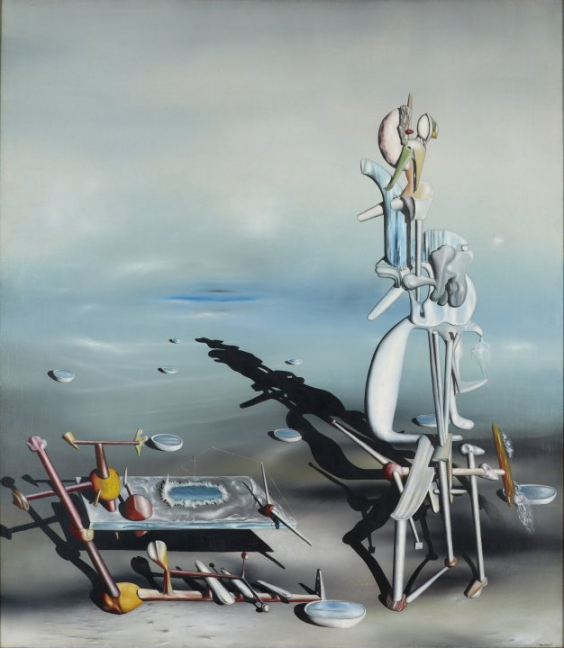
Yves Tanguy’s masterpiece, “Infinitely Divisible,” represents the zenith of surrealist landscape painting. Known for his desolate, barren plains populated by unidentifiable, biomorphic shapes, Tanguy invites viewers into a psychological wasteland. This artwork serves as a direct portal into the subconscious mind, bypassing logical interpretation in favor of pure, visceral emotion. The forms within the painting cast long, precise shadows, creating an eerie sense of hyper-reality within an entirely fabricated universe.
The Visual Vocabulary of Yves Tanguy
Unlike other surrealists who relied on recognizable objects placed in impossible scenarios, Tanguy invented an entirely new visual lexicon. His shapes resemble bones, pebbles, or amoebas, yet they defy strict biological classification. This ambiguity forces the viewer to project their own subconscious fears and desires onto the canvas. The smooth, meticulously blended gradients of the background contrast sharply with the crisp, tactile nature of the foreground objects, amplifying the dreamlike quality of the composition.
Psychological Symbolism and Automatism
Tanguy was a staunch practitioner of surrealist automatism, a technique designed to suppress conscious control and allow the unconscious mind to guide the brush. “Infinitely Divisible” was likely born from this spontaneous process. The vast, empty spaces in his work often reflect the isolation of the modern human condition, while the clustered, interacting forms suggest complex, unspoken psychological tensions.
Historical Context and Surrealist Evolution
To truly understand “Infinitely Divisible,” one must examine the era in which Tanguy operated. Emerging in the wake of World War I and deeply affected by the looming threat of subsequent global conflicts, the Surrealist movement sought refuge in the mind. Tanguy’s wastelands are often interpreted as post-apocalyptic visions, reflecting the collective trauma and anxiety of a generation that had witnessed unprecedented destruction.
The Influence of Freudian Psychoanalysis
Sigmund Freud’s theories on dreams and the unconscious were the bedrock of Surrealism. Tanguy’s landscapes function as visual manifestations of the Freudian concept of the “id.” The boundless horizons represent the limitless nature of the unconscious, while the strange, interacting monoliths symbolize repressed desires and memories bubbling to the surface. By stripping away real-world context, Tanguy created a pure, unadulterated map of human psychology.
Expert Advice: How to Analyze Surrealist Masterpieces
Approaching a work like “Infinitely Divisible” requires a shift in traditional art appreciation. Instead of asking what the painting represents in the real world, viewers must engage with the emotions it evokes. Here are professional strategies for decoding surrealist art:
- Suspend Logical Expectation: Do not search for a literal narrative. Embrace the ambiguity and let the imagery wash over you.
- Analyze Spatial Relationships: Notice how objects interact. Are they crowding each other, or are they isolated? This often dictates the emotional tone of the piece.
- Observe Lighting and Shadows: In Tanguy’s work, the direction of light is often consistent, grounding his impossible objects in a believable, albeit alien, physical space.
- Trust Initial Visceral Reactions: Your immediate emotional response is often the most accurate interpretation of the artist’s subconscious intent.
Comparing Tanguy to Surrealist Contemporaries
While Tanguy shared the overarching goals of the Surrealist movement, his execution was highly distinct. The following table highlights the core differences between Tanguy and other leading figures of the era.
| Artist | Primary Subject Matter | Atmosphere and Tone |
|---|---|---|
| Yves Tanguy | Abstract, biomorphic forms in barren landscapes | Desolate, melancholic, and infinite |
| Salvador Dali | Distorted reality, melting clocks, recognizable figures | Theatrical, shocking, and highly symbolic |
| Rene Magritte | Everyday objects placed in paradoxical contexts | Intellectual, witty, and philosophical |
Frequently Asked Questions (FAQ)
- What does “Infinitely Divisible” mean in the context of Yves Tanguy’s art?
- The title suggests a mathematical or philosophical concept of endless fragmentation. In the painting, it reflects the complex, unbreakable nature of the subconscious mind, where thoughts and fears can be endlessly dissected but never fully resolved.
- What technique did Yves Tanguy use to create his paintings?
- Tanguy primarily used oil on canvas, employing a highly refined, meticulous brushwork technique. He combined this traditional craftsmanship with surrealist automatism, allowing his subconscious to dictate the spontaneous generation of forms without prior sketching.
- Why are there no recognizable objects in Tanguy’s landscapes?
- Tanguy intentionally avoided recognizable objects to prevent viewers from anchoring the painting to the physical world. This forces a purely psychological engagement, making the painting a mirror for the viewer’s own internal landscape.
- How did Yves Tanguy’s background influence his artwork?
- Tanguy served in the merchant navy and traveled extensively. The vast, empty horizons of the ocean, as well as the rugged, megalithic landscapes of his native Brittany, profoundly influenced the spatial dynamics and geological elements seen in his dreamscapes.